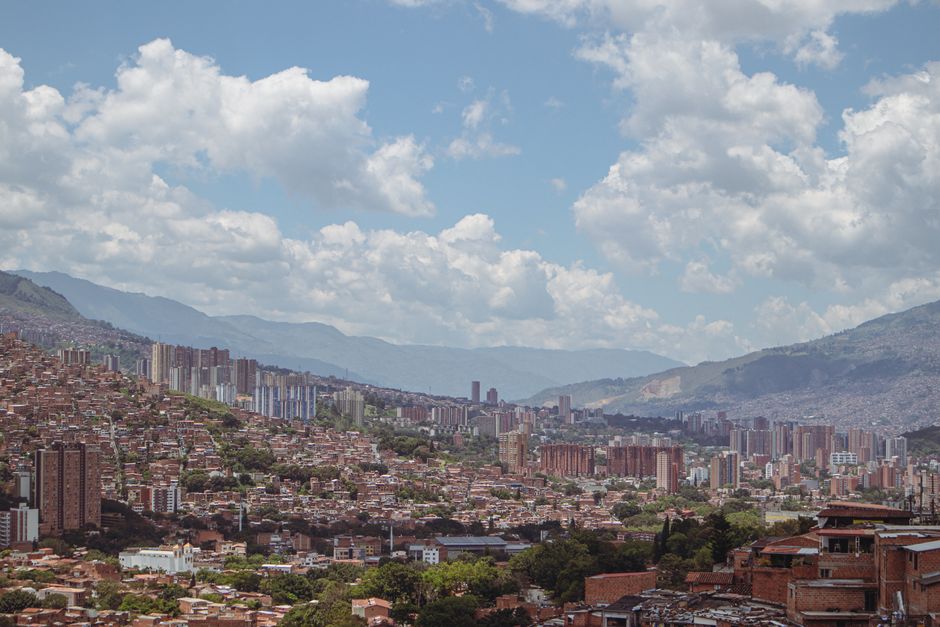
Foreign direct investment into Medellín's metropolitan area hit $1.4 billion USD in the first half of 2026, according to figures released this week by the Cámara de Comercio de Medellín para Antioquia, putting the city on pace to break its 2024 annual record of $2.1 billion. The tech, logistics and nearshore services sectors are driving the bulk of inflows, with the Ruta N innovation district in Aranjuez continuing to absorb the largest share of registered enterprise activity.
The timing matters. Global uncertainty, war-related energy disruptions in Europe, a leadership transition in Iran, and persistent supply chain fragility, has pushed multinationals to diversify their operational footprints into stable, cost-competitive cities. Medellín, with its GMT-5 time zone alignment with U.S. markets, a growing bilingual workforce and infrastructure built out under the Pacto por la Innovación program, keeps showing up on those shortlists. The city is not a passive beneficiary here. It has been actively courting this capital for three years.
Property Prices and the Jobs Picture
Residential property in El Poblado now averages 9.8 million pesos per square metre for new builds, up roughly 11 percent from July 2025, according to data tracked by the Lonja de Propiedad Raíz de Antioquia. Laureles-Estadio and Envigado are seeing faster percentage growth, closer to 14 percent year-on-year, as buyers priced out of Poblado move east and south. That compression is squeezing renters: a two-bedroom apartment near Parque Envigado that rented for 2.2 million pesos monthly in early 2025 is now listing at 2.7 million or higher.
On the jobs side, the Área Metropolitana del Valle de Aburrá reported an unemployment rate of 9.3 percent for May 2026, down from 11.1 percent in the same month last year. The fall is real but uneven. Formal employment in business process outsourcing, software development and advanced manufacturing is expanding, particularly along the Autopista Norte corridor near Copacabana. Informal employment in commerce and street vending, concentrated in zones like Minorista and the central Prado neighbourhood, remains stubbornly high and is not captured in the headline figure.
ProColombia, the national investment promotion agency, logged 23 new foreign-owned companies registering operations in Antioquia during the second quarter of 2026 alone, the highest single-quarter figure since ProColombia began publishing the metric in 2019. Most are mid-size firms from the United States, Spain and Mexico, with service-sector registrations outpacing manufacturing by a ratio of roughly three to one.
What Business Owners and Workers Should Watch
The Banco de la República's benchmark interest rate sits at 8.25 percent as of July 2026, down from a cycle peak of 13.25 percent in late 2023. Credit is becoming accessible again, but banks are still applying conservative debt-service requirements. Small business owners looking to expand, particularly those operating in the Distrito Medellinnovation zone along Calle 67, should have at least 18 months of clean cash-flow records ready before approaching lenders. The financing environment is improving, not open.
For workers, the clearest practical signal is sectoral. The Servicio Nacional de Aprendizaje, SENA, is running a new accelerated certification program in cloud infrastructure and bilingual customer operations through its Medellín Centro facility on Calle 51, with 1,200 funded places available through September 2026. That program exists precisely because employers are signalling they cannot fill mid-skill roles fast enough. Anyone in the informal economy with basic digital literacy who hasn't looked at that program should look now.
Property investors should note that the Alcaldía de Medellín's updated Plan de Ordenamiento Territorial, expected to be ratified in full by October 2026, will reclassify several lots in Castilla and Manrique for mixed commercial-residential development. Prices in those corridors have not yet moved to reflect that regulatory shift. The window is narrow.