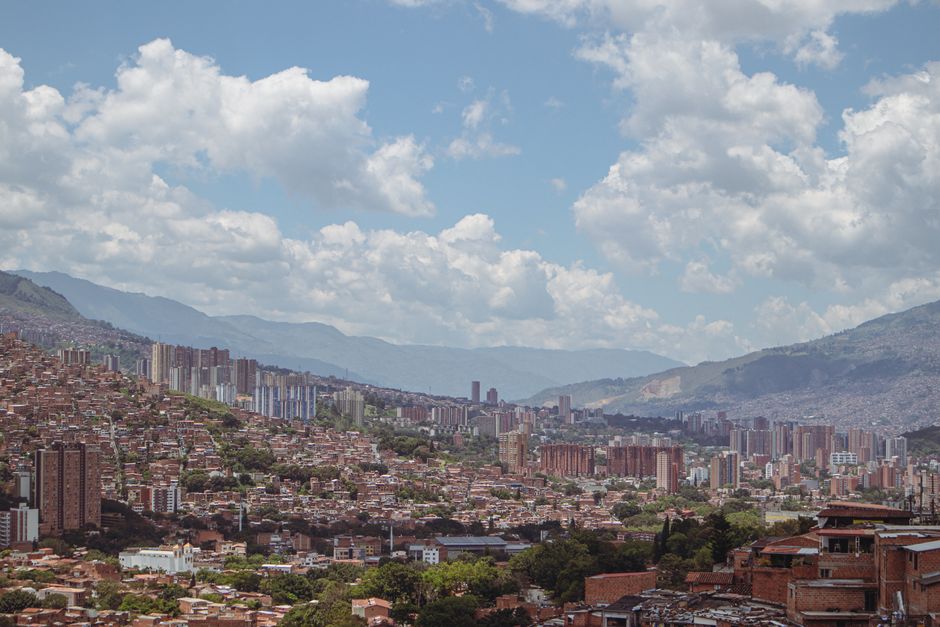
Three continents delivered seismic news in 48 hours, and recruiters in El Centro are already adjusting their hiring plans. The death of Iran's Supreme Leader Ali Khamenei, Keiko Fujimori's disputed victory in Peru's presidential race, and a surge in North American tourists rerouting holiday dollars to Mexico have combined to create an unusually volatile moment for Medellín's trade-dependent economy, one that local business owners say they cannot afford to ignore.
The timing matters because Medellín spent the first half of 2026 consolidating genuine export momentum. Ruta N, the city's innovation hub on Calle 67, reported in May that tech-sector export revenues had climbed 18 percent year-on-year in Q1, driven partly by nearshoring contracts from U.S. firms looking for alternatives to Asian supply chains. That progress is now complicated by a geopolitical environment that changes by the morning briefing.
The Mexico Factor and What It Costs Medellín
The most immediately painful signal came from North America. U.S. travelers, squeezed by the Trump administration's travel restrictions and scrambling to plan around the 2026 World Cup calendar, have been pouring money into Mexican beach resorts and Mexico City hotels at record rates. Tourism economists tracking Latin American visitor flows estimate that Mexico captured roughly 340,000 additional U.S. short-haul tourists in Q2 alone, passengers who in prior years might have connected onward to Colombia.
For Medellín's El Poblado neighborhood, which houses dozens of boutique hotels along Avenida El Poblado and the cluster of co-working spaces around Parque Lleras, the deflection is measurable. Occupancy rates at mid-range hotels in the zona rosa corridor dropped to 61 percent in June, down from 74 percent in June 2025, according to data compiled by Cotelco Antioquia, the regional hotel association. Fewer tourists means fewer baristas, fewer Rappi delivery riders, fewer English-language tour guides on payroll, the informal-sector multiplier effect runs fast and deep here.
ProColombia, the national export and tourism promotion agency with a regional office in the Edificio Bancolombia tower on Avenida Los Industriales, has been urging Medellín operators since March to diversify their source markets toward Brazil, Spain and South Korea. That advice looks prescient now. Businesses that heeded it are hiring bilingual staff with Portuguese and Korean language skills; those that didn't are cutting weekend shifts.
Iran and Peru Open Different Doors
The chaos surrounding Khamenei's funeral and the factional infighting visible on the streets of Tehran has spooked commodity traders globally, nudging oil prices upward and keeping the Colombian peso under modest depreciation pressure. The peso closed at approximately 4,310 to the dollar on Friday, a level that hurts importers of machinery in the industrial municipality of Itagüí but gives exporters of software services and cut flowers a quiet margin boost.
Peru's political uncertainty post-Fujimori adds a separate wrinkle. Medellín's Camacol Antioquia, the regional construction industry chamber, had been eyeing Lima as a potential export destination for prefabricated building materials. Investors now want to see cabinet appointments before signing cross-border contracts. Several mid-sized firms in the Guayabal industrial corridor said this week they are deferring Peru-facing logistics hires until August at the earliest.
The silver lining, if one exists, is that global turbulence tends to accelerate nearshoring inquiries from U.S. and European multinationals looking for stable, Spanish-speaking tech talent. Ruta N's job board showed 340 new software engineering postings in June, the highest monthly figure since October 2024. Salaries for mid-level full-stack developers are running between 8 million and 12 million pesos per month, competitive enough to retain graduates who might otherwise leave for Bogotá.
Hiring managers across the city say the practical move right now is to build redundancy into client portfolios: no single export market should represent more than 30 percent of revenue. Firms that locked themselves into U.S. tourism dependency or Peru infrastructure deals are the ones fielding the hardest conversations with their boards this weekend. The companies that diversified are posting jobs. The gap between those two groups is widening fast.